Paid product · Windows PC · Battery tags, mains receivers
The kit was built.
Nobody can find it.
It was picked on Tuesday, it went to paint, and now the line is waiting for it. Three people are walking the plant looking. Somebody suggests checking despatch again. Everyone is sure it was scanned somewhere.
The Track System answers it without anyone scanning anything. A small battery tag goes on the stillage, the trolley or the kit box. Receivers the size of a matchbox sit on the wall in each area, plugged into an ordinary phone charger, and they listen. A PC on your network works out which area each tag is in and draws it on your floor plan.
The screen
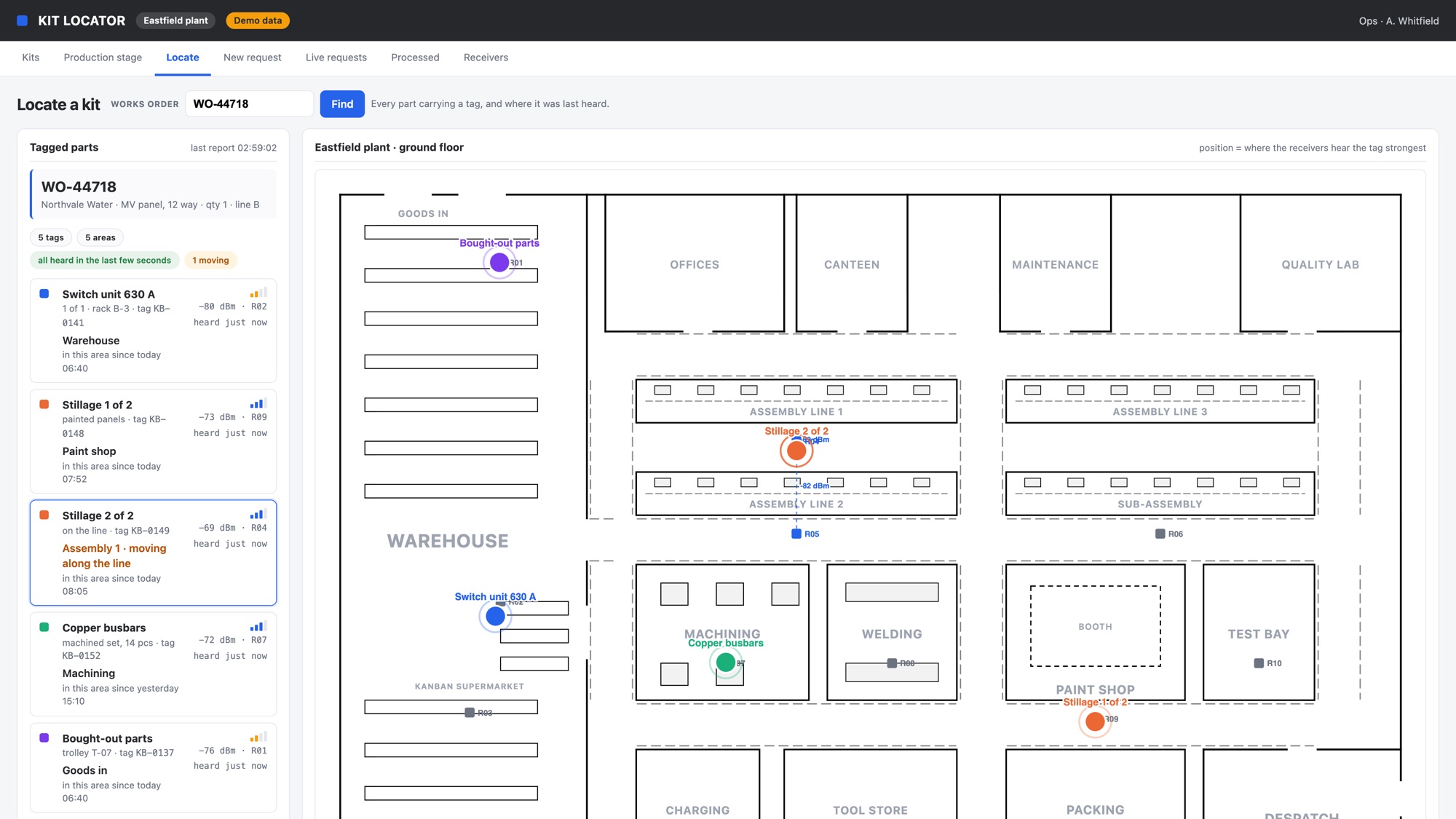
Type the order. See every part of it.
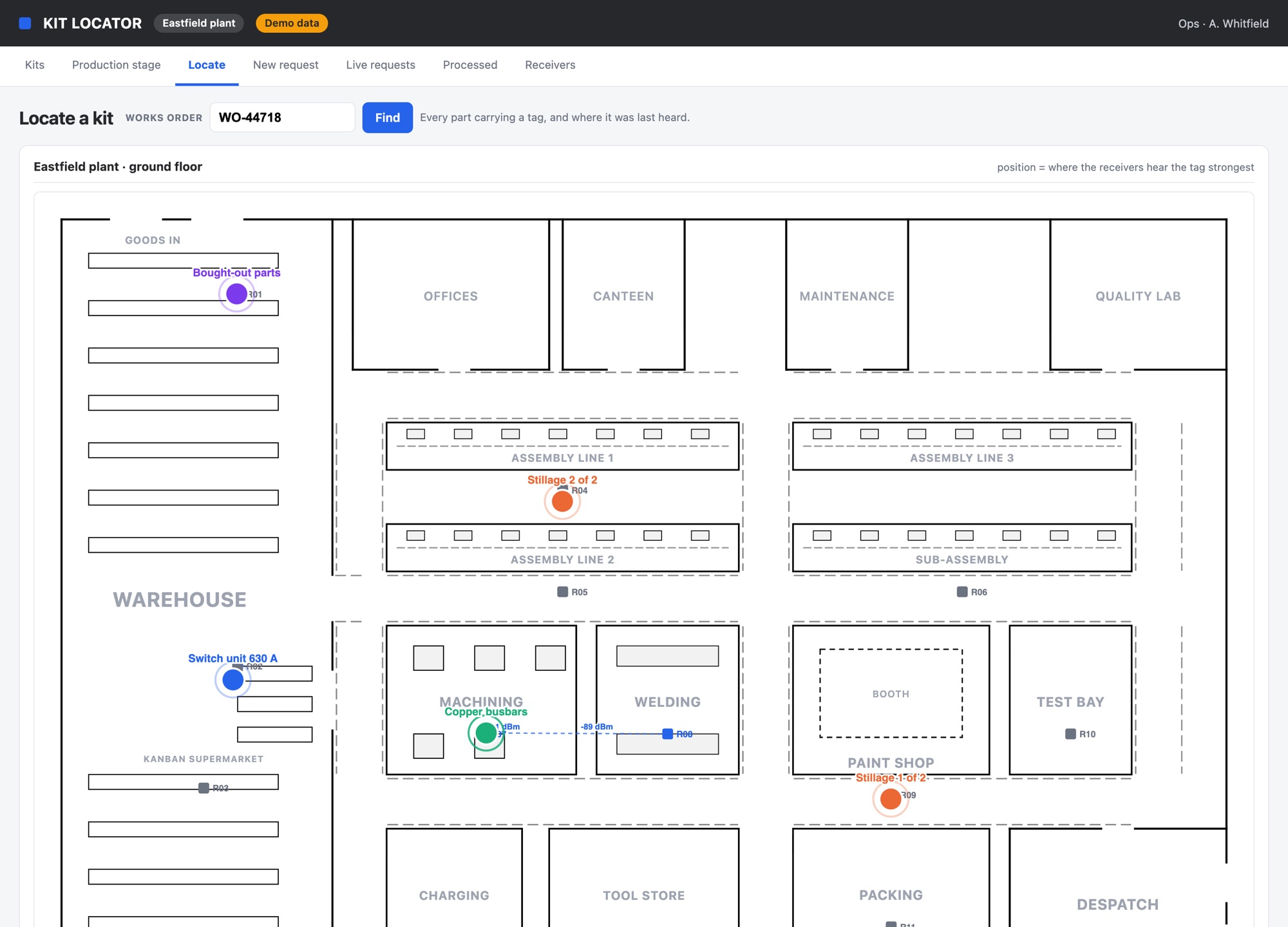
One works order can be four stillages, a trolley of bought-out parts and a pallet in the warehouse. Type the order number and every tagged part of it appears with the area it is in, how long it has been there, and how well it is being heard right now.
- Areas, honestly. It tells you the tag is in the paint shop, not that it is 3.2 metres from the north wall. Radio strength is good for "which area", and pretending otherwise is how these systems lose trust.
- It keeps the last known area. A tag carried through a part of the plant with no receiver does not vanish from the screen. It stays where it was last heard, with the time it was heard.
- Moving is visible. A tag being carried along a line reads differently from one sat on a rack, and the screen says so.
- Nothing to remember. There is no scan at a handover, so there is no handover to forget.
The hardware
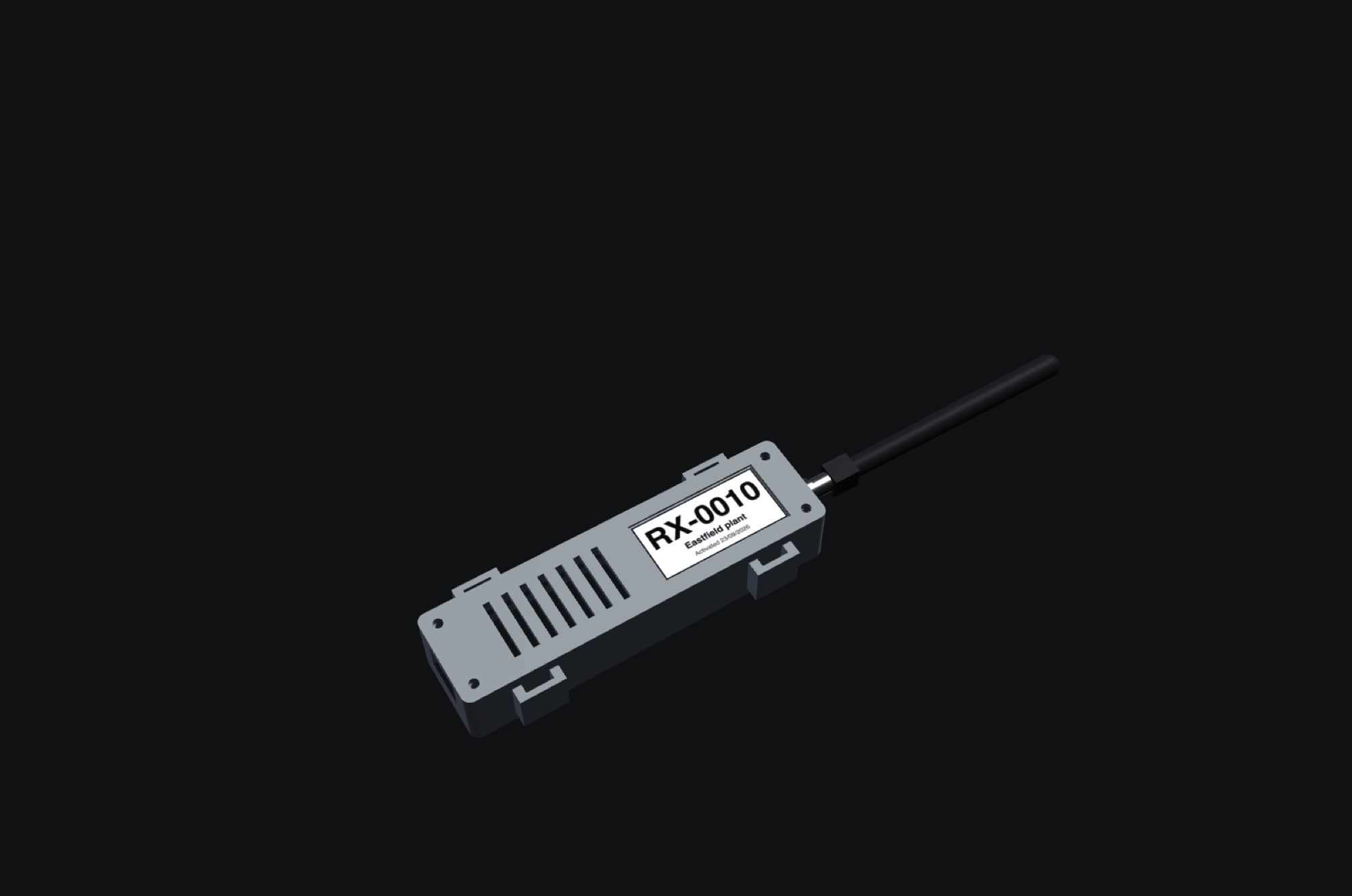
A tag, and a box on the wall
The tags are sealed, weatherproof and cost a few pounds each. They run two to three years on their own battery, survive being dropped in a stillage, and have a code printed on the front that is scanned once when it goes on a kit.
- Receivers plug into a phone charger. One per area, on a wall or a post, hung on two screws. No wiring into the building, no ceiling work, no contractor.
- Tags are reused. They come back with the empty stillage, get cleared, and go out on the next kit. You buy for how many kits are out at once, not for how many you build in a year.
- Two things watched from the start: a tag that has been out far longer than a kit normally takes, which usually means it left on a lorry, and a tag nobody has heard for days, which usually means a flat battery rather than a lost kit.
What IT usually asks
No. The receivers listen on Bluetooth and never accept a connection or pair with anything. On the network side they are clients that open no ports, so there is nothing listening to attack. They can also run on their own small network, separate from yours, with no internet and no route to anything but the PC that collects the readings.
No. Only tags you have named are recorded. Phones and watches walking past are counted so we can see how busy the airwaves are, and then discarded — they never reach the disk.
Every receiver carries a password, set when it is programmed, and readings without it are refused and logged. Settings and names can only be changed on the machine running the system, not from elsewhere on the network.
Receivers can report over a long-range radio link instead, straight to the collecting PC, with no network at all. Updates then arrive every half minute rather than every second, which is far more often than a kit moves.
Nowhere off site. The tags, the areas and the history are files on your own machine. No cloud account, no subscription, no telemetry.
What it is honestly good for
Knowing which area something is in, and being told when it moves between areas. That covers the questions plants actually ask: where is this kit, has it left paint yet, what is still sitting in goods in, which trolleys have not come back.
It is not a system for finding which shelf a part is on. Getting to that needs a different and far more expensive class of hardware, and any supplier who promises centimetres from a cheap tag is selling you the wrong thing.
How it is sold
A fixed price agreed before any work starts: the tags and receivers for your areas, fitted to your floor plan, plus the software to run it on your own machine. No per-tag licence and nothing that expires. It fits alongside the kitting and shortage tools if you already run them, or stands on its own.
The sensible way in is one area and a handful of tags, so you can see the readings in your own building before committing to the whole plant.
Get in touch
What do you lose,
and how often?
Tell me what goes missing and how many areas the plant has, and I will tell you honestly what it would take and what it would cost.
rodrigo@burlesystems.co.uk